

Laptops Notebooks
--
Questions
--
Followers
Top Experts

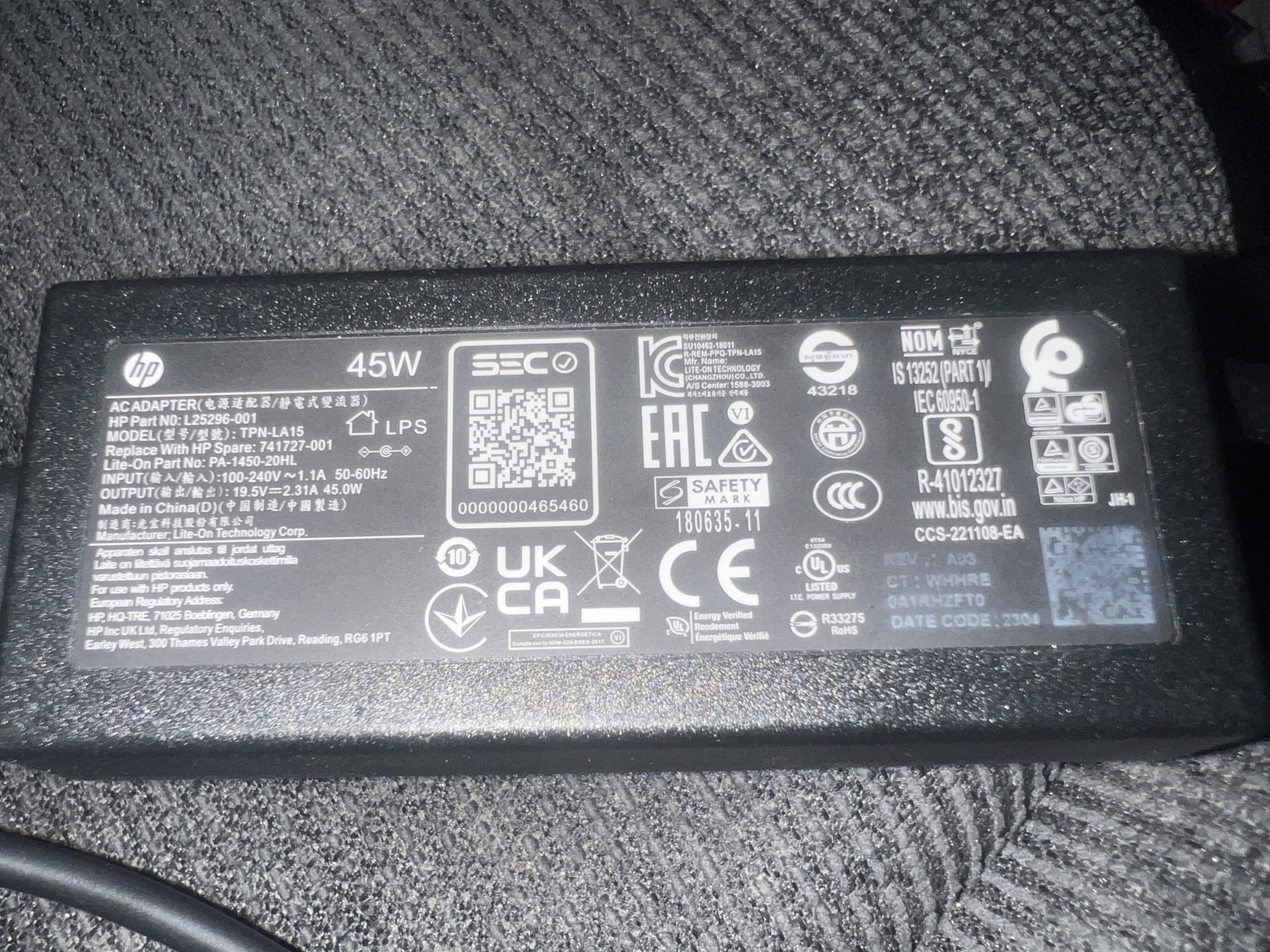
I have to raise warranty but not sure what is the serial number of hp charger.
What is the serial ?
Zero AI Policy
We believe in human intelligence. Our moderation policy strictly prohibits the use of LLM content in our Q&A threads.

are you returning the laptop or the power supply?
REV A?3
CT WHHRE
OA1AHZFTO ?
charger/Ac Adaptor/Power Supply are all equivalents when it comes to laptops.
So you've tested with another charger and it works.. but not with this one?


EARN REWARDS FOR ASKING, ANSWERING, AND MORE.
Earn free swag for participating on the platform.

It's the line above the Date Code, normally they don't ask and just do a like for like replacement with the current equivalent.
The laptop gets the serial number and this is a "part." They usually don't have a specific serial number for parts. You generally just use the Model and Part number, since parts are interchangeable.

Agree with serialband. If the charger came with the laptop, then you provide the serial number of the laptop for parts replacement. However, HP and most vendors likely won't replace anything until/unless you prove it's defective. If you can prove that, then they will instruct you on the specific information they need to complete the warranty exchange.
Get a FREE t-shirt when you ask your first question.
We believe in human intelligence. Our moderation policy strictly prohibits the use of LLM content in our Q&A threads.

is it still under warranty ? then they may repce the laptop as well
i am unsure but i believe the number that starts with SU. second line of the middle col.
you can probably send in the picture and let them figure it out.
they have no reason to bother you with the s/n at all beyond either their own bureaucratic idiocy or making it voluntarily hard on customers.
do not plug a random different charger. that is clearly asking for trouble. chargers are not equivalent unless you checked.
based on what i have around right now : 2 laptops (one very old hp probook and my thinkpad E-something) are more or less a match (20V /19.5V and >3A) so one could replace the other assuming you change plugs. the hp is vastly overpowered, btw.
the last one is a daewoo which is powered with 12V. i believe the laptop has some builtin protection but chances are throwing 20V would damage it within seconds and it would be very unlikely it could withstand a couple working charges at 20V and survive.
all said chargers output rectified current and the electronics inside would not let regular dc which some other chargers might deliver.
more modern laptops charge over usb3C regular DC and negotiate the voltage. in a few years, i expect chargers as we know could disapear.
They use the laptop serial number to help verify the production and purchase dates to gauge warranty periods.
P.S.
We already have modern chargers. They used to be transformer based and quite huge, almost the same volume as the laptops themselves. I still have an old 486 Laptop that has one. They became digital and were already less than 1/5 the size of those old transformer based adapters. We now have GaN chargers that are half that size and produce the same power even more efficiently.
Laptop circuits are sturdier than that. You can use a 16V and 19V charger somewhat interchangeably for short periods on certain laptop models. I did that with a large group of HP Omnibook 500 and Thinkpad 570e that happened to have the same barrel plug and polarity but different voltages. It's not something you should do if you don't know how electricity and circuits work. It's only for a short term and must be monitored or you'll burn out something.
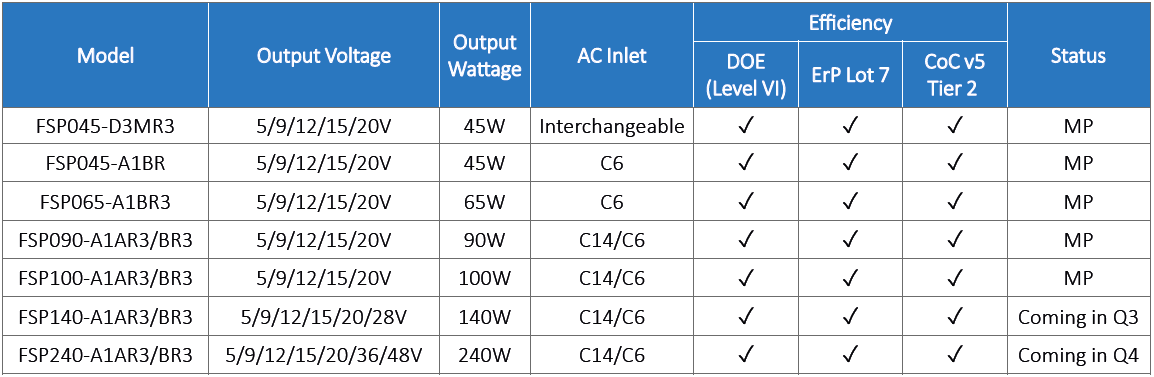
The original USB PD spec negotiates 5/9/15/20 V settings with a maximum of 5A of current. That's only 100W maximum. I do have a 135W USB C charger for a Dell. That's part of the newer USB PD spec that includes 28V, 36V and 48V.
https://www.fsp-ps.de/de/news-155.html
EARN REWARDS FOR ASKING, ANSWERING, AND MORE.
Earn free swag for participating on the platform.
<< They use the laptop serial number to help verify the production and purchase dates to gauge warranty periods.>>
and determine which provider or which batch had that many defaults after a period of time and plenty of other useful stuff. sure.
then i am pretty sure they read the number anyway whan you return the product.
using the s/n as an alternative to returning the product in a trustful relationship makes sense for obvious reasons.
asking someone to read a tiny number before the send the product so you can read that same number again yourself is bureaucratic nonsense.
<< They used to be transformer based and quite huge >> sure. the coils went away in the 2000's. besides the dangerousness should you open the thing up, there is no discussion the current tech is better. what is new nowadays is the power negociation that only works afaik on usb plugs since there is no point in negociating on dedicated ones.
most electronic devices can be powered with significantly different input voltage than was intended. actually something that works properly indeifferently with 3V - 25V is not uncommon at all. chips are usually a little more restrictive but 2.5-6V could be expected to be ok in most cases and many of them can withstand 12 without frying. they will heat up, though.
but then power devices are different and in this case, the laptop will match the voltage to the batterie's. a 12V powered device probably uses an 8-10V battery. a 20V powered device would probably use a 15V battery. neither the battery nor the components (capacitors namely to smooten the dc) are built to withstand that much power. chances are you will charge fast but burn something. not to mention that overheating components sometimes damage a different component.
I'm more interested in the efficiency gains over the PD negotiation aspect. I am glad that the EU is forcing it so we no longer have to pay $90-$150 (price gouging rates) for a power adapter and we can now buy standard commodity adapters between $20-$50. We can also keep the old one and stop throwing them away with each new laptop. Eventually, they can separate all the chargers from the devices and we won't need to throw away so many of them.
The newer chargers are better because they're more efficient at converting the electricity, requiring less space to dissipate wasted heat. The older stuff was less efficient and generated a lot more waste heat to get the same work done. The old transformer chargers worked in a much narrower voltage range. The new switching circuits are rated for 100V~240V (since the early 2000s) without needing a selector switch to select the fixed 110-120V or 220-240V ranges. The even newer GaN circuits are more efficient and generate even less heat in a smaller size.
The 19V chargers were designed to charge the 4 Cell batteries and the 16V chargers were designed for the 3 Cell batteries of the different laptops.
Many circuits accept larger ranges voltages or they wouldn't work well. Solar Panels vary in voltage and current throughout the day, but the controllers will still convert them to the proper home voltages regardless of the panels' outputs. All electronics have to because the 60Hz, 120V or 240V power feeds do fluctuate throughout the day.
If you live in an old neighborhood in a Northern part of a large state with old line transformers that aren't actually rated for all the power in use in modern homes, you will see brownouts, lights noticeably dimming, when your neighbor's AC comes on. The electric Utility is miserly with maintenance and won't upgrade until one day your line transformer blows. That's when they finally come to replace it with a higher rated transformer and your lights no longer dim noticeably. They also neglect other maintenance tasks until things break and cause major catastrophes and do more damage and kill more lives than any terrorist organization has done. They're only miserly with the upkeep and are quite generous with bonuses to the decision makers.
+1 for the convergence. i expect the usb standards will solve many of the remaining issues.
currently powered by a what-is-that-called-? “peg-apower” a.k.a. noname perfectly powering a thinkpad after 2 original chargers died or had issues after not so long. the replacement was ~45€ so not that expensive.
Get a FREE t-shirt when you ask your first question.
We believe in human intelligence. Our moderation policy strictly prohibits the use of LLM content in our Q&A threads.
Laptops Notebooks
--
Questions
--
Followers
Top Experts
A laptop or notebook is a portable personal computer with a clamshell form factor, suitable for mobile use. Although originally there was a distinction between laptops and notebooks, the former being bigger and heavier than the latter, there is often no longer any difference. Laptops are commonly used in a variety of settings, such as at work, in education, and for personal multimedia. A laptop combines the components, inputs, outputs and capabilities of a desktop computer, including the display screen, speakers, a keyboard, and pointing devices (such as a touchpad or trackpad) into a single unit. The device can be powered either from a rechargeable battery or by mains electricity from an AC adapter.
Create your account and start contributing!